
Spring Conversations
Growing up, I lived next to a pond on the outskirts of a cold Canadian city. It was small and manmade, a storm retention pond they called it, collecting rain water that ran through the sewer drains.
When we first moved there the backyard was still fresh dirt, soft and thick like clay, the area surrounding the pond was a barren lawn. The spread of grass was contained by pavement walkways and on the far side, a stone retaining wall made by slabs of sedimentary rock quarried from the Ottawa Valley. When I was young I would pick through them. They crumbled and peeled away in layers revealing a variety of fossils; small worms, little shells, all stuck in the rock with a grain so fine I thought it had been made just like the concrete paths.
As the pond aged, cattails furred around the edges, and sedges too. In the time before everything was grown-in my brother and I would go down to the water and try to catch fish. One of them we brought home. It lived in a bowl on my desk, until the next morning when I found its black, and still-slimy body flopped dead on the carpet beside my bed.
Over the years, the cattails filled-in enough that you couldn’t access the pond anymore. Then came the winter when, after enough kids sledded down the hill and broken through the ice during the run-out, the city stopped mowing and let nature take over. Shrubs, grasses, wildflowers, even trees, filled in the empty space. And with them came birds.
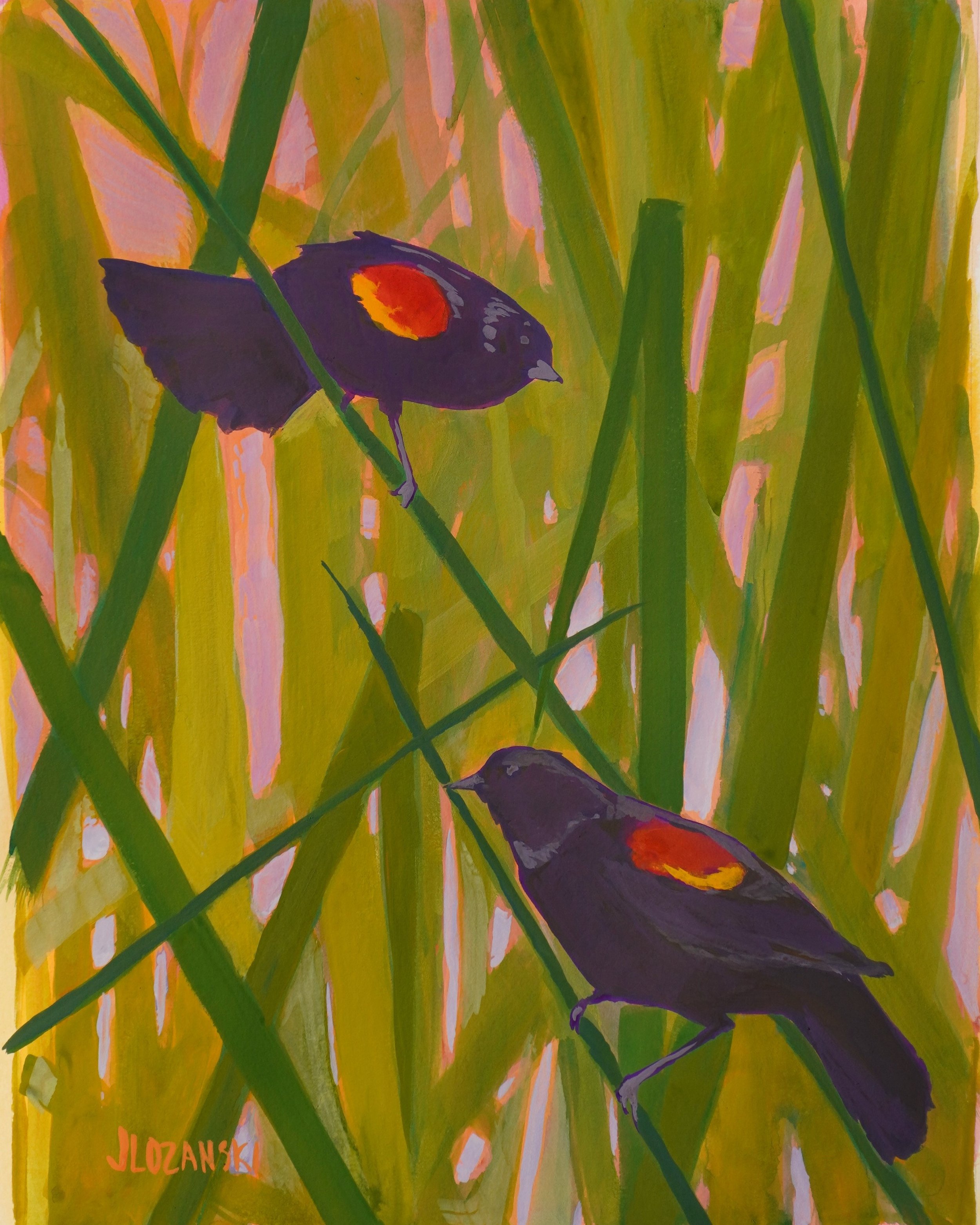
I knew spring had arrived when the air smelt like mud and you could hear the familiar conk-la-ree of red-winged blackbirds. They were always among the first to return when the snow was still melting. I would lie in my bed, with a window open on those unseasonably warm spring days, listening to the calls from the pond.
conk-la-ree
conk-la-ree
conk-la-ree
Over the sounds of passing cars and kids playing in the park, red-winged blackbirds stood out. Jet-black bodies and a flash of red and yellow on their wing, they were the first birds I ever learned to name.